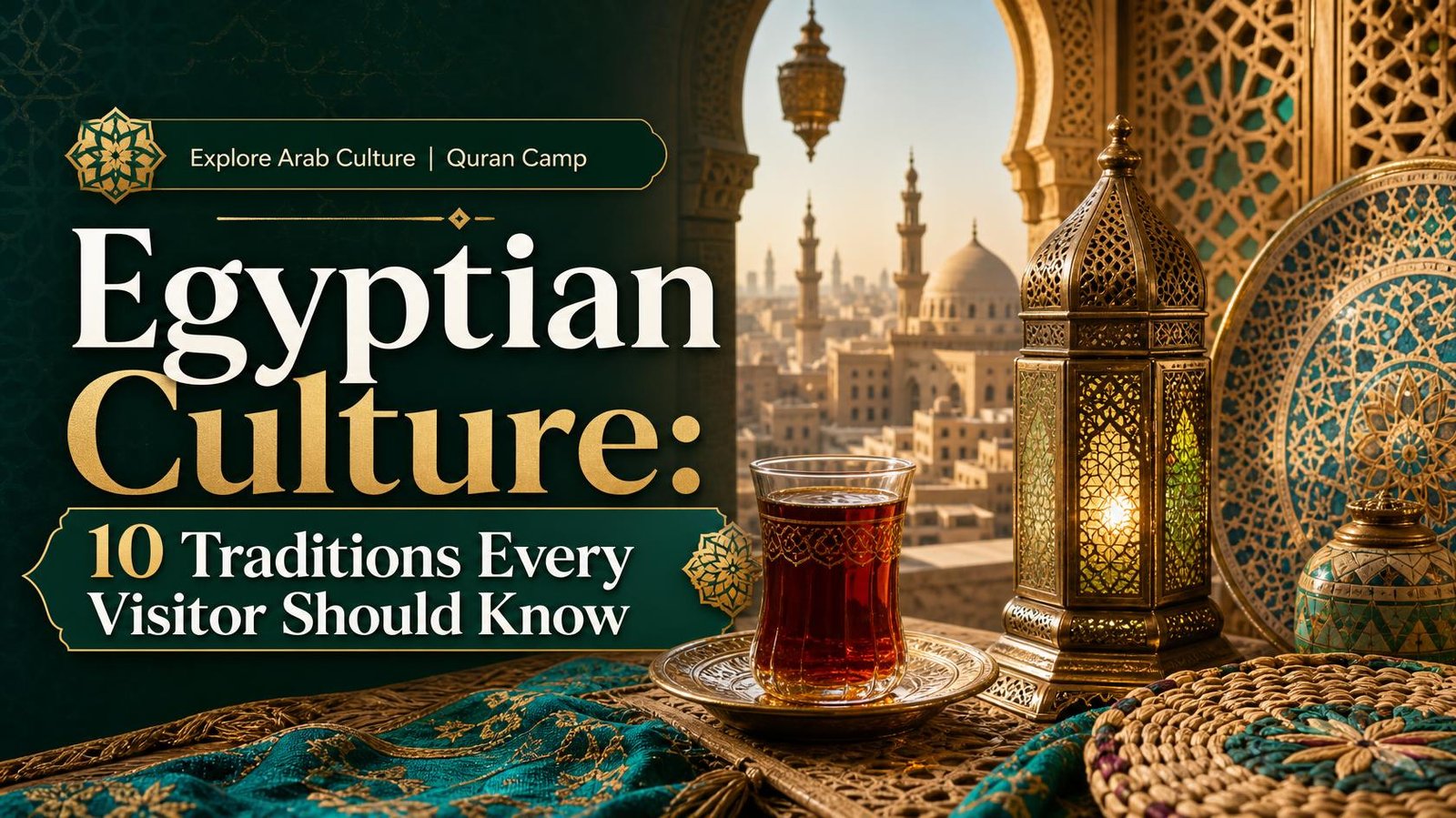
Egyptian Culture: 10 Traditions Every Visitor Should Know
Egypt is famous for its beautiful Nile River, and fascinating history. But Egyptian culture is much more than ancient monuments. It is also about family, hospitality, delicious food, and traditions that bring people together.
If you are planning to visit Egypt or simply want to learn about Arab culture, here are 10 Egyptian traditions that will help you understand everyday life in this fascinating country.
1. Family Comes First
Family plays a central role in Egyptian society. Many Egyptians maintain close relationships with their parents, siblings, grandparents, and extended family. Family gatherings are common, especially during holidays and special occasions.
Arabic word: عائلة (ʿāʾila) — Family.
2. Welcoming Guests with Hospitality
Egyptians are often known for their warm hospitality. When guests visit a home, hosts may offer tea, coffee, or something to eat. Refusing an offer politely is perfectly acceptable, but accepting a drink can be a lovely way to connect with your hosts.
Arabic expression: أهلاً وسهلاً (Ahlan wa sahlan) — Welcome!
3. Drinking Tea and Coffee Together
Tea is a popular drink in Egypt and is often served to guests, friends, and family members. Arabic coffee is also enjoyed, although its preparation and popularity vary between households and regions.
Sharing a drink is not just about refreshment; it is also an opportunity to talk and spend time together.
Arabic word: شاي (shāy) — Tea.
4. Celebrating Ramadan Together
Ramadan is a special month for many Egyptians. Families gather to break their fast at sunset, and streets and homes may be decorated with colorful lanterns called fawanees. Neighbors and charitable organizations may also share food with people in need.
The atmosphere becomes especially lively in the evenings.
Watch the beatiful mosque Ibn Tulun
Arabic word: رمضان (Ramaḍān) — Ramadan.
5. Enjoying Traditional Egyptian Food
Food is an important part of Egyptian culture. Popular dishes include koshari, a mixture of rice, pasta, lentils, and tomato sauce; ful medames, made from fava beans; and taameya, the Egyptian version of falafel, traditionally prepared with fava beans.
Sharing meals is a wonderful way for visitors to discover local flavors.
Arabic word: أكل (akl) — Food.
6. Showing Respect to Older People
Respect for older people is an important value in many Egyptian families. Younger people may greet older relatives warmly, offer them a seat, or help them with everyday tasks.
Polite expressions are also useful when speaking to older people or someone you have just met.
Arabic expression: من فضلك (min faḍlak / min faḍlik) — Please, when speaking to a man / a woman.
7. Visiting Relatives on Special Occasions
Family visits are common during Eid, weddings, and other celebrations. Relatives may gather for a meal, exchange greetings, and spend hours talking together.
These visits help maintain family connections across generations.
Arabic word: زيارة (ziyāra) — Visit.
8. Giving to Others and Helping the Community
Helping others is an important value in Egyptian society. Many Egyptians give to charity, support families in need, and share food with their neighbors. These acts of kindness are especially visible during Ramadan, when many people donate meals and contribute to charitable initiatives.
Giving to others is not only about money; it can also mean offering help, sharing what you have, or making someone feel welcome.
Arabic word: صدقة (ṣadaqa) — Charity or voluntary giving.
9. Enjoying the Spirit of Egyptian Markets
Traditional markets, known as souks, are an important part of everyday life in many Egyptian cities. Visitors can discover spices, handmade crafts, clothing, and local food.
Bargaining is common in some markets, particularly those selling souvenirs and handicrafts, although it is not appropriate in every shop.
Arabic word: سوق (sūq) — Market.
10. Using Warm Greetings in Everyday Life
Greetings are an essential part of social interaction in Egypt. People often begin conversations with a greeting before discussing business or asking for help.
Learning a few Arabic expressions can make everyday interactions more enjoyable and help visitors connect with local people.
Here are three useful expressions:
- السلام عليكم (As-salāmu ʿalaykum) — Peace be upon you.
- صباح الخير (Ṣabāḥ al-khayr) — Good morning.
- شكراً (Shukran) — Thank you.
Discover Egyptian Culture Through the Arabic Language
Understanding Egyptian culture becomes even more rewarding when you learn the language people use in their daily lives. Arabic helps you understand greetings, traditions, conversations, and the meanings behind many cultural practices.
At Quran Camp, you can explore Arabic lessons designed to help non-native speakers develop their language skills step by step.
Whether you are interested in Egyptian culture, planning a visit to an Arab country, or simply curious about the Arabic language, every new word brings you closer to understanding the people and their traditions.
Explore Arab Culture with Quran Camp, and let your Arabic journey begin!
Arabic-Speaking Countries: Names, Populations, and Languages
Useful Arabic Phrases for Beginners: A Simple Guide to Everyday Arabic
Negation in Arabic: How to Say No and Not

You may also like

Compete for the Hereafter, Not the World

A Gentle Wake-Up Call for Your Heart: Finding Your Way Back to Allah