
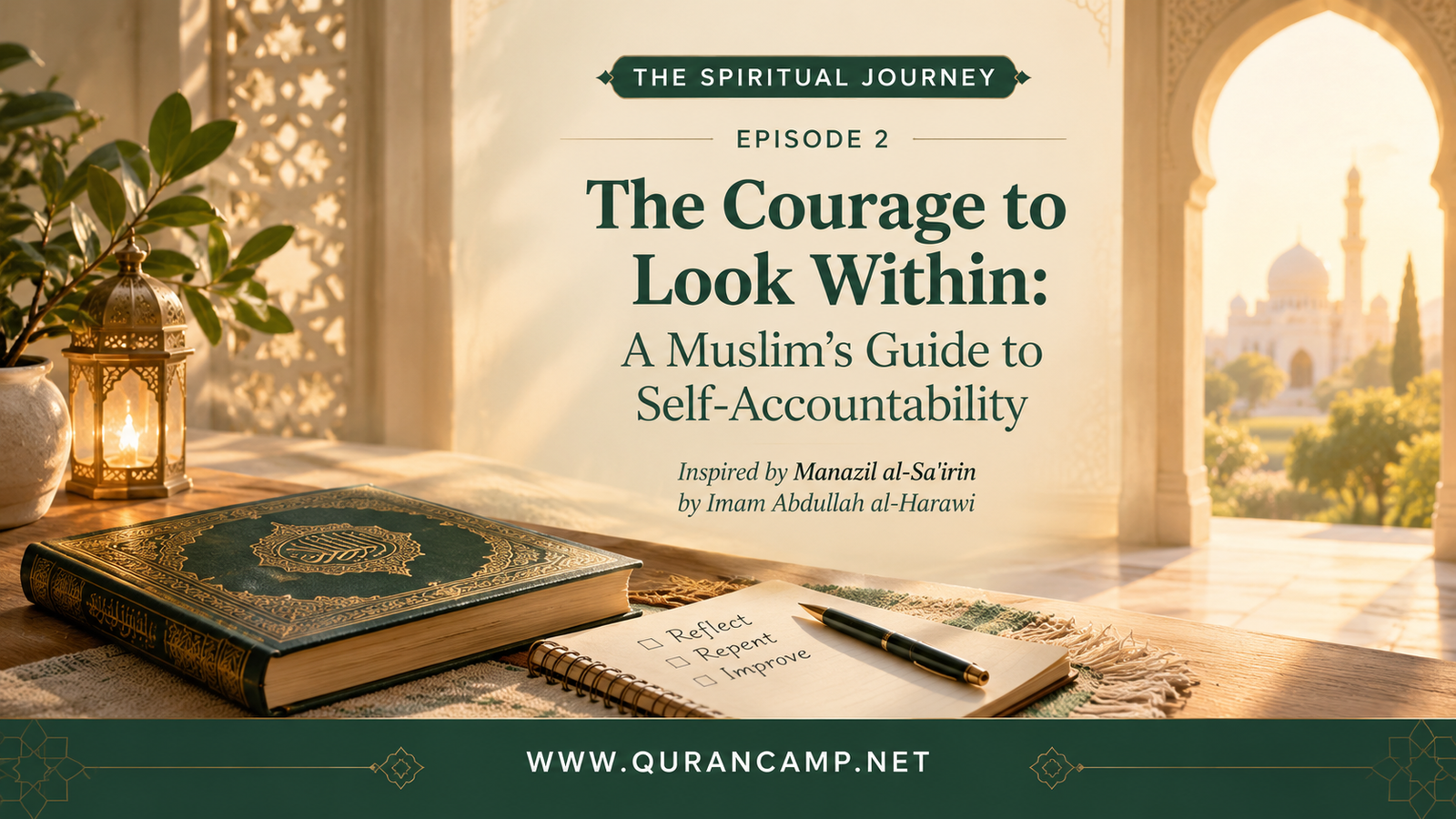
The Courage to Look Within: A Muslim’s Guide to Self-Accountability
The Spiritual Journey – Episode 2
Inspired by Manazil al-Sa’irin by Imam Abdullah al-Harawi
What Is Self-Accountability in Islam?
Every day, we do many things. Some are good, and others may be mistakes. But how often do we stop and think about our actions?
In Islam, looking at our own actions is called self-accountability (Muhasabah). It means asking ourselves: Am I doing what pleases Allah? What do I need to change?
Self-accountability helps us become better Muslims. It reminds us to thank Allah for His blessings, ask forgiveness for our mistakes, and keep trying to do good.
In Manazil al-Sa’irin, Imam Abdullah al-Harawi discusses self-accountability as an important step on the journey to Allah.
1. Remember Allah’s Blessings
Think about the blessings Allah has given you. He gave you life, health, time, family, and many other gifts.
He also helps you pray, read the Quran, and do good things.
These blessings are not because we are perfect. They are gifts from Allah.
When we remember them, our hearts become full of gratitude. We stop feeling proud of ourselves and start thanking Allah.
Ask yourself: Do I thank Allah enough for His blessings?
2. Look at Your Actions Honestly
A Muslim should look at their actions and ask: Am I doing what Allah has asked me to do?
We should begin with our duties, such as prayer, fasting, and treating people well. We should also look at the things we say and do every day.
If we find a mistake, we should try to correct it.
We should not spend so much time on extra acts of worship that we forget our main duties or the rights of other people.
Ask yourself: Am I giving the most important things the attention they deserve?
3. Do Not Feel Proud of Your Good Deeds
When you pray, read the Quran, or help someone, remember that Allah has helped you do these good things.
You should be happy when you do good, but you should not feel better than other people.
Instead, thank Allah and ask Him to accept your deeds.
A good deed should make your heart more humble, not more proud.
Ask yourself: Do my good deeds make me more humble?
4. Do Not Use Allah’s Decree as an Excuse
Sometimes, people make mistakes and say, “It was Allah’s decree.”
Yes, everything happens by Allah’s will and knowledge. But this does not mean we can choose to do wrong and then refuse to take responsibility.
When we make a mistake, we should admit it, ask Allah for forgiveness, and try not to repeat it.
Allah says:
“Say, ‘With Allah is the far-reaching argument.’”
— Quran 6:149, part of the verse (Sahih International)
We should trust Allah while also taking responsibility for our choices.
Ask yourself: When I make a mistake, do I admit it or make excuses?
5. Do Not Look Down on Others
You may see someone making a mistake while you are trying to do what is right.
Do not feel proud of yourself or make that person feel small.
You do not know what is in another person’s heart or how their story will end. A person who makes mistakes today may sincerely repent and become better tomorrow.
Instead of judging others, ask Allah to guide them and help you stay on the right path.
Ask yourself: Do I treat people with kindness, even when they make mistakes?
Your 7-Day Self-Accountability Challenge
For the next seven days, take a few minutes before going to sleep to ask yourself these questions:
- What blessing from Allah am I thankful for today?
- Did I perform my prayers and other duties?
- Did I hurt anyone with my words or actions?
- Did I do something good for another person?
- Did I make an excuse for a mistake instead of correcting it?
- Did I feel proud of myself or look down on someone?
- What is one thing I can do better tomorrow?
You do not need to be perfect. The goal is to recognize your mistakes, learn from them, and keep moving forward.
Final Reflection
Self-accountability is not about hating yourself or feeling hopeless. It is about being honest with yourself and wanting to become better.
When you do something good, thank Allah for helping you. When you make a mistake, ask Him to forgive you and help you change.
Remember: A believer keeps learning, keeps repenting, and keeps returning to Allah.
May Allah help us recognize our mistakes, be thankful for His blessings, and improve our actions every day. Ameen.
Continue Your Spiritual Journey
Manazil al-Sa’irin: A Journey to a Better Heart
A Gentle Wake-Up Call for Your Heart: Finding Your Way Back to Allah (Episode 1)

You may also like

The Beautiful Reward of Visiting the Sick in Islam