
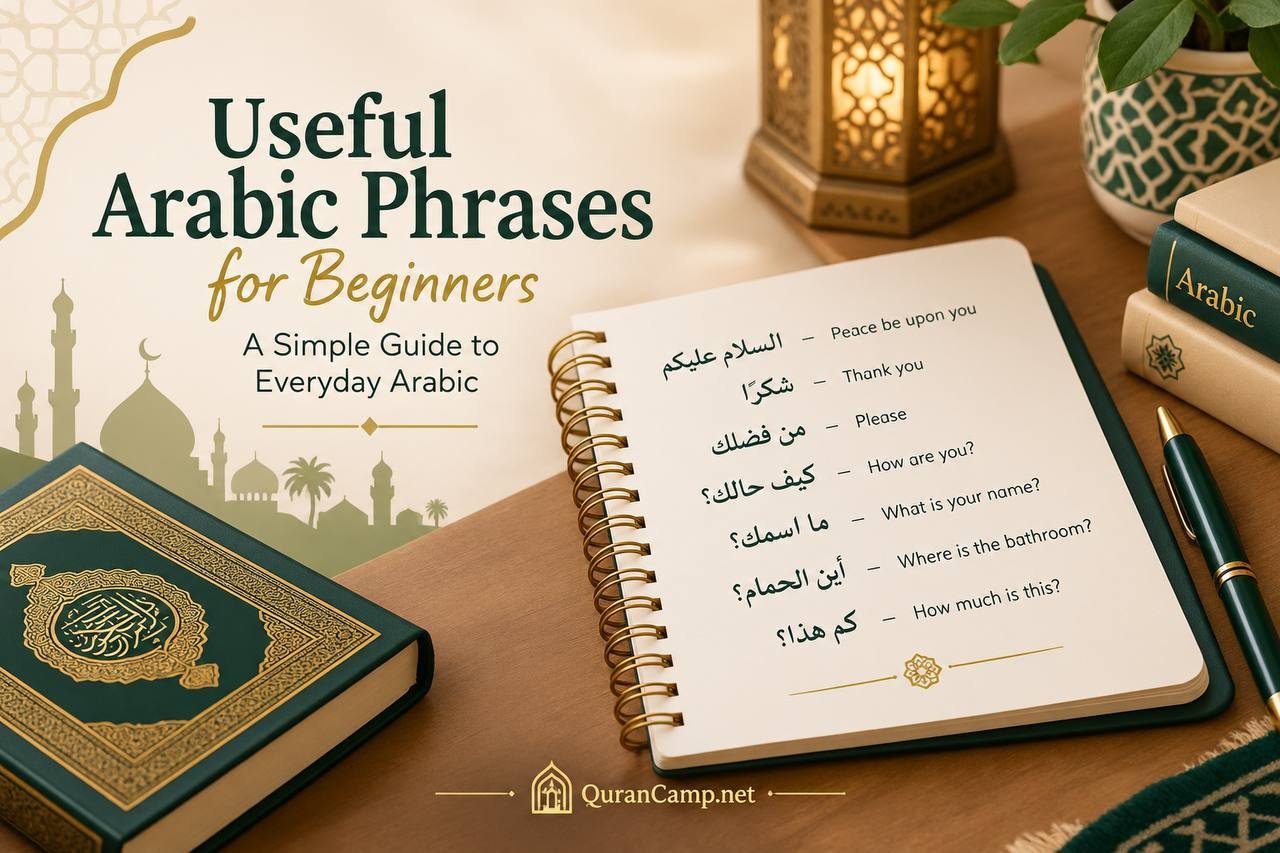
Useful Arabic Phrases for Beginners: A Simple Guide to Everyday Arabic
Learning Arabic can be an exciting journey, especially when you start using simple words and phrases in everyday conversations. Whether you want to travel to an Arabic-speaking country, communicate with Arabic speakers, or understand Islamic expressions, learning a few basic phrases is a great place to start.
You don’t need to memorize hundreds of words at once. Begin with these useful Arabic phrases, practice their pronunciation, and gradually build your confidence.
1. Basic Arabic Greetings
Greetings are among the first expressions you should learn when studying Arabic. They help you start conversations politely and naturally.
• As-salamu alaykum (السلام عليكم) — Peace be upon you.
• Wa alaykum as-salam (وعليكم السلام) — And peace be upon you too.
• Marhaban (مرحبًا) — Hello.
• Sabah al-khayr (صباح الخير) — Good morning.
• Masa’ al-khayr (مساء الخير) — Good evening.
• Ma’a as-salama (مع السلامة) — Goodbye.
Tip:As-salamu alaykum is a common greeting among Muslims around the world. Learning it is a wonderful way to begin connecting with Arabic speakers.
2. Polite Arabic Expressions
Polite expressions make conversations easier and help you communicate respectfully in different situations.
• Min fadlik (من فضلك) — Please.
• Shukran (شكرًا) — Thank you.
• Afwan (عفوًا) — You’re welcome.
• Law samaht (لو سمحت) — Excuse me, please.
• Aasif (آسف) — Sorry (said by a male).
• Aasifa (آسفة) — Sorry (said by a female).
Try using these expressions whenever you practice Arabic with a teacher or a language partner.
3. Simple Questions in Arabic
Asking questions is an important step toward having real conversations. These basic questions can help you introduce yourself and learn more about other people.
• Ma ismuka? (ما اسمك؟) — What is your name? (to a male)
• Ma ismuki? (ما اسمكِ؟) — What is your name? (to a female)
• Kayfa haluk? (كيف حالك؟) — How are you? (to a male)
• Kayfa haluki? (كيف حالكِ؟) — How are you? (to a female)
• Min ayna anta? (من أين أنت؟) — Where are you from? (to a male)
• Min ayna anti? (من أين أنتِ؟) — Where are you from? (to a female)
Notice that Arabic sometimes uses different forms when speaking to men and women. Learning these differences early will help you speak more accurately.
4. Useful Arabic Phrases for Everyday Conversations
Here are some additional expressions that you can use in everyday situations.
• Na’am (نعم) — Yes.
• La (لا) — No.
• La afham (لا أفهم) — I don’t understand.
• Afham qalilan (أفهم قليلًا) — I understand a little.
• Hal tatakallam al-Injiliziyya? (هل تتكلم الإنجليزية؟) — Do you speak English? (to a male)
• Ayna al-hammam? (أين الحمام؟) — Where is the bathroom?
• Kam hadha? (كم هذا؟) — How much is this?
Don’t worry about speaking perfectly at first. Focus on understanding the meaning of each expression and practicing it aloud.
5. How to Learn Arabic Phrases Faster
The best way to remember new Arabic expressions is to use them regularly. Here are three simple tips to help you get started:
Practice a little every day. Choose three to five new phrases and repeat them aloud until they become familiar.
Listen to native speakers. Pay attention to pronunciation, rhythm, and the way words connect in natural speech.
Practice with a teacher. A qualified Arabic teacher can help you correct mistakes, improve your pronunciation, and use expressions in the right context.
Remember that Modern Standard Arabic and spoken Arabic dialects are not always the same. If your goal is everyday conversation, you may also want to learn the dialect spoken in the country you plan to visit.
Start Your Arabic Learning Journey Today
Learning Arabic becomes easier when you take small, consistent steps. By mastering basic greetings, polite expressions, and everyday questions, you can begin communicating with Arabic speakers and develop a strong foundation for further learning.
If you want to improve your Arabic reading, pronunciation, and speaking skills, explore the learning resources and Arabic courses available at Quran Camp.
Visit QuranCamp.net and take your first step toward learning Arabic with confidence!

You may also like

A Gentle Wake-Up Call for Your Heart: Finding Your Way Back to Allah

Manazil al-Sa’irin: A Journey to a Better Heart