The Spider in the Quran: A Beautiful Detail in Surah Al-Ankabut
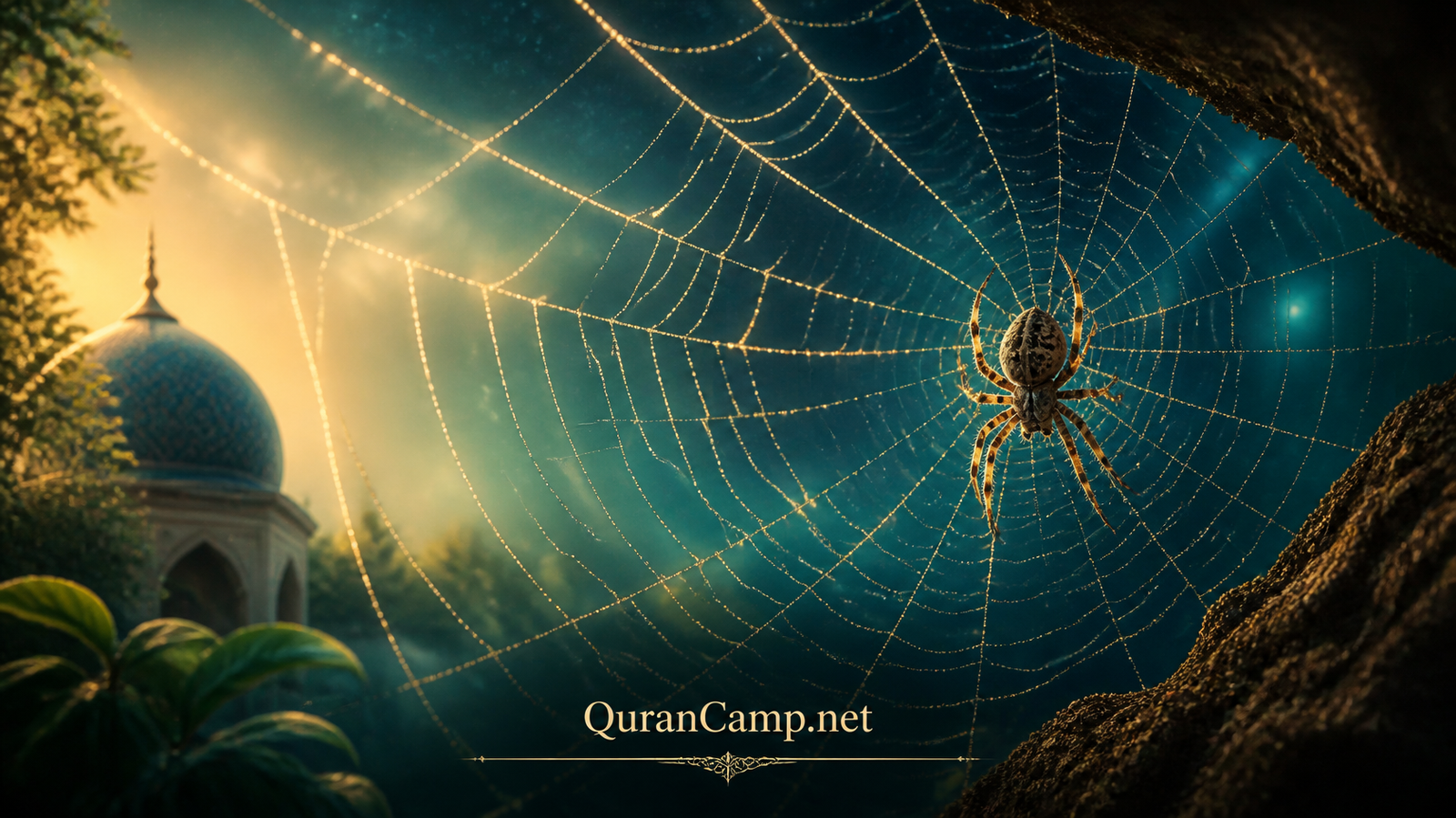
The Quran invites us to reflect on the world around us and discover lessons in even the smallest creatures. One beautiful example appears in Surah Al-Ankabut, where Allah gives the example of the spider’s house.
Allah says:
“The example of those who take protectors other than Allah is like that of the spider who takes a home.”
(Quran 29:41, Sahih International)
Have you ever noticed the word “takes” in this verse? In Arabic, Allah uses the feminine form of the verb: اتَّخَذَتْ (ittakhadhat).
Why Is the Feminine Form Used?
In Arabic, the word العنكبوت (al-ankabut), meaning spider, is grammatically masculine in some contexts. However, the verb in this verse is feminine.
Interestingly, in many spider species, females build webs, while males often have different roles and may not build webs in the same way. This makes the verse an interesting invitation to reflect on the precise language of the Quran.
We should be careful, however, not to claim that all female spiders build webs or that this grammatical detail alone proves a scientific miracle. Spider behavior varies among species.
A Lesson Beyond the Spider’s Web
The main message of the verse is deeper than the spider itself. Allah explains that those who depend on protectors besides Him are relying on something as fragile as a spider’s home.
A spider’s web may look beautiful and carefully made, but it cannot provide the kind of protection that a strong home offers.
This example reminds us to place our trust in Allah, the One who truly protects us. It also encourages us to read the Quran thoughtfully and appreciate the lessons found in its words and examples.
May Allah help us reflect on His Book and grow closer to Him through its guidance. Ameen.

You may also like

When There Seems to Be No Way Out: Trust Allah
The Art of Arabic Calligraphy: History, Styles, and Secrets