
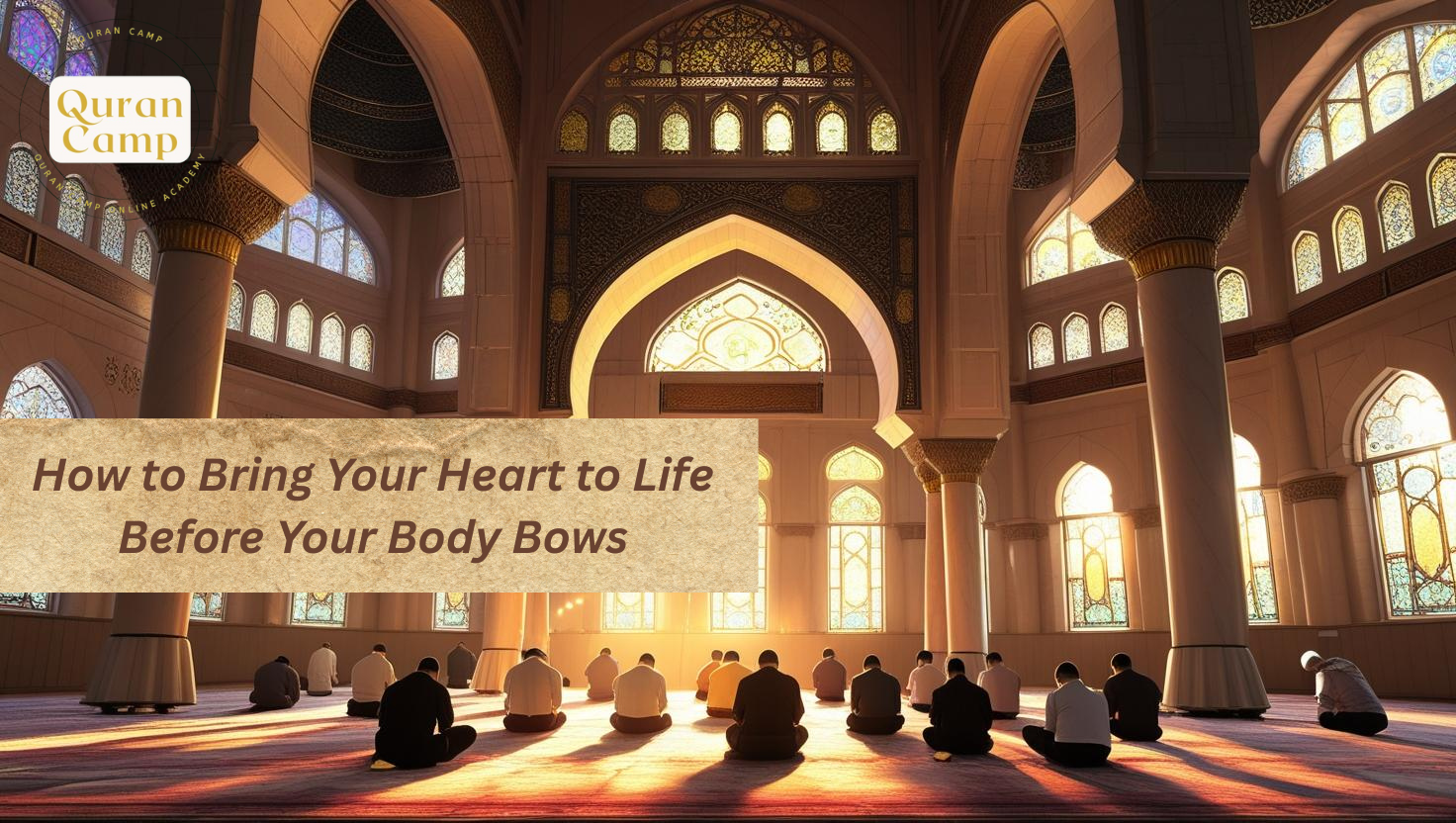
Secrets of Prayer (3): How to Bring Your Heart to Life Before Your Body Bows
Prayer in Islam is not just physical movements — it is a journey of the heart to Allah and a moment of mercy repeated five times a day. Many people pray, but few truly experience the spiritual secrets of prayer and feel its peace and sweetness.
In this article, we explore the deeper meaning of salah (Islamic prayer) and understand why prayer sometimes feels uplifting and at other times heavy.
The True Secret of Prayer: The Presence of the Heart
The true secret of prayer is not in the number of units (rak‘ahs), but in the presence of the heart. The body may be standing in prayer, but the heart may be lost in worldly thoughts.
Imagine someone standing before a great king asking for forgiveness, yet looking around distractedly or turning their back. This is the example of a person who stands in prayer while their heart is busy with everything except Allah
The Body Prays… But Where Is the Heart?
A powerful example explains the state of a distracted worshipper:
A servant who committed many wrongs is invited by the king for forgiveness and reconciliation. Instead of entering with humility and regret, he looks around carelessly and sends his servants to serve on his behalf!
This is how prayer can become for some of us:
The limbs bow and prostrate, but the heart is absent.
Why Does the Heart Run to Worldly Matters in Prayer?
During prayer, the heart often turns away toward worldly concerns, even though this world holds little value compared to the Hereafter.
Prayer was prescribed to be a regular cleansing for sins that affect the heart between prayers. Throughout the day, a person falls into mistakes and distractions. Prayer comes to purify the soul again and again.
Wudu (Ablution): More Than Physical Cleanliness
Wudu is not only about washing the body — it is also a spiritual preparation for standing before Allah.
• Its outer purpose: cleaning the body
• Its inner purpose: cleaning the heart through repentance
That is why the supplication after wudu asks Allah to make us among:
“Those who constantly repent” (purity of the heart)
and “Those who purify themselves” (purity of the body)
Saying the testimony of faith after wudu renews sincerity and clears the heart from hidden forms of shirk (associating partners with Allah) and religious innovations before entering prayer.
Why Do People Feel Empty Despite Comfort?
Today many people live in physical comfort but suffer from anxiety, sadness, and inner emptiness. The reason is simple: the body is cared for, but the soul is neglected.
The soul does not find peace in wealth or entertainment. It finds peace in closeness to Allah. And prayer is one of the greatest sources of spiritual peace and emotional healing.
Between Fear and Hope: The Balance of the Believer
The heart’s journey to Allah must be balanced between fear and hope, like a bird flying with two wings.
• Fear protects us from sin and laziness
• Hope keeps us from despair and motivates us to return to Allah
When hearts become careless, reminders that awaken fear can help bring people back to sincere and focused prayer.
How to Improve Focus in Prayer: 5 Simple Steps
If your prayer feels empty or distracted, try these steps:
- Remember that you are truly standing before Allah
- Bring your heart before you move your body
- Make wudu with the intention of purifying your heart
- See every prayer as a chance for forgiveness
- Gently bring your mind back whenever it wanders.
Source
This article is inspired by the classical Islamic book “Asrar al-Salah (The Secrets of Prayer)” by Imam Ibn al-Qayyim, which explores the spiritual meanings, inner humility (khushu’), and the heart’s presence in prayer.
The Hidden Secrets of Salah (Prayer) 4: Deep Meanings That Transform Your Prayer Experience

You may also like

Compete for the Hereafter, Not the World

Egyptian Culture: 10 Traditions Every Visitor Should Know